- Leadership Unplugged
- Posts
- Success Disaster

Happy Thursday,
In November 2025, I was sitting quietly in front of a flip chart, rethinking the sales and marketing strategy for our own business. I had spent ages mapping the ideal growth plan. But then a thought hit me, and it was terrifying: What if it all worked out, and then some? Could we even handle it and still deliver quality? The honest answer was not what I wanted. That moment forced a change in internal priorities, investment, systems, structures, and how we work. It was the day I first-hand felt how growth can be just as dangerous as decline, and there’s a lesson in it for us as leaders. Let’s dive in.
🧠 LEARN something.
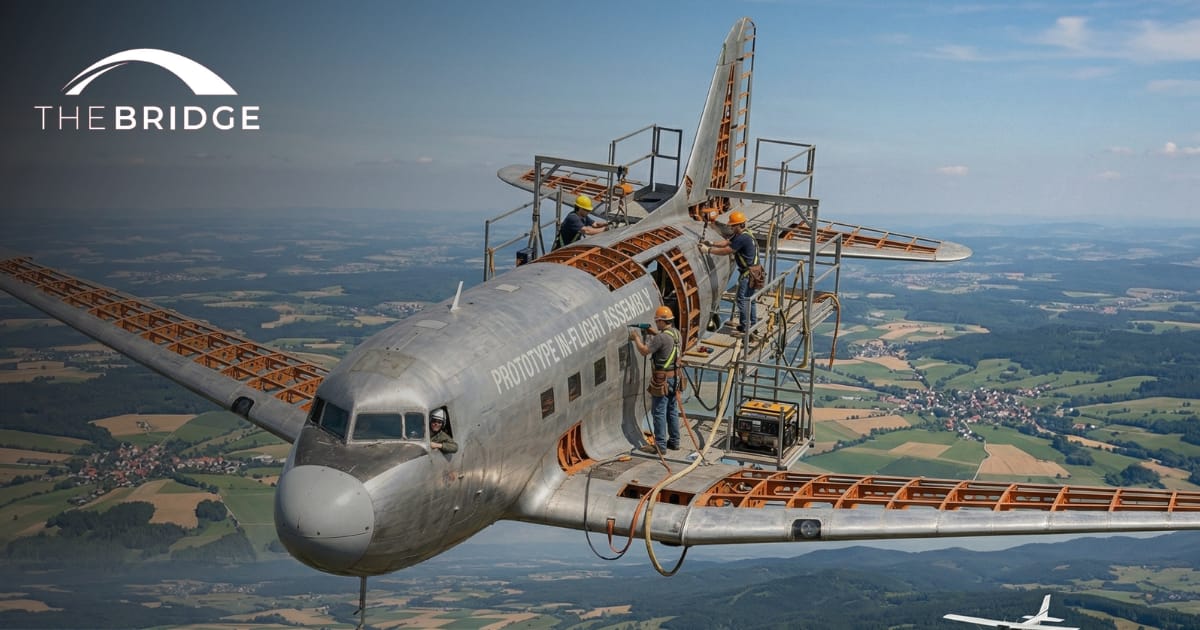
I won’t take the credit for that thought emerging while I was sitting in front of my flip chart. Most good ideas come from somewhere. In recent times, I had been reading a lot about Anthropic, one of the fastest-growing companies in the world. Of course, I am not an AI company, but in business, the best learning often comes from looking outside your own industry, right? So, one concept that shows up repeatedly in these high-tech, high-growth companies is the idea of a ‘success disaster’. Basically, it’s when you get what you wanted and realise your systems, people, or sanity can’t handle it.Whether you are an ambitious CEO, owner, solopreneur, or leader in business, the dream of growth is often universal. We picture smooth graphs, bigger numbers, expanding teams. We spend time planning for failure, putting risk mitigation strategies in place. That is all standard practice.But how often do we ask: What if it all goes to plan? What if you get everything you want, and more? What happens when success outpaces the systems and structure holding you together?
It is easy to be seduced by the visible success signals, revenue, KPIs, headcount. From the outside, everything looks brilliant. Inside, you are operating on caffeine and duct tape. Work starts to cluster around a few key people. Decisions slow down. Context lives in people’s heads, not shared systems. The team compensates through effort, longer hours, unreal deadlines, and improvised heroics. It works, for a while, until it doesn’t. Most success disasters are not failures of competence or skill. They are failures of capability, capacity, structure, systems, and leadership. The environment changes too quickly, but the company does not, and neither does your leadership playbook. We operate in an unstable and ambiguous business landscape right now, which forces us into a survival mindset, so it is natural to plan for worst-case scenarios. But what about the best-case scenario? Heck, what about 2x the best-case scenario? Now that’s a scary thought experiment.
🤔 REFLECT on an idea.
“More companies die of indigestion than starvation.”
Too much growth without digestion, without systems that can absorb it, creates internal tension and pressure that not only kills momentum from within but can also lead to serious external consequences for your quality and reputation. Growth can break you just as fast, if not faster, than failure.
😊 SMILE a little.
We built the business on passion, grit, and also Dave who remembers everything. Very scalable.
✅ DO IT to get results.
Good strategic leadership means treating success as a risk, not just failure as a risk. Because success is not the end zone, it is the pressure zone that will test your systems, structures, leadership, and capability at a much deeper level. So, at your next strategy meeting, ask one simple question: “If demand doubled tomorrow, what would break first?”
Sit with the answers. This will expose strain points, blind spots, and bottlenecks you cannot see when things are steady. It also shifts your team from a survival mindset to one focused on opportunity, strength, and growth. Because you do not just want success. You want success that lasts.
🌱 How we can support you and your team.
We provide strategic leadership solutions tailored to align with your business strategy, size, and budget. We can support your with:
1:1 Leadership and Performance Coaching
Team Coaching, for high performing teams
1:1 Health & Lifestyle Coaching for busy stressed leaders.
Workshops, offsites and team development.
Or our flagship individual Leadership Coaching Programs.
Kia pai tō wiki
Kenny Bhosale
CEO & Founder, The Bridge Leaders
Reply